Most Topeka buyers walk into the inspection thinking of it as a condition check. It is really something else. Because Kansas does not require sellers to hand you a standardized disclosure form, the inspection is often the first document in the file that describes the house honestly. That single fact reshapes how much rides on those ten to fifteen days.
If you understand what Topeka inspectors keep finding, and how Kansas law treats what the seller did or did not tell you about those same items, you can price the risk before you sign, negotiate from the report rather than around it, and avoid the after-closing surprises that lead to lawsuits instead of repairs.
The disclosure gap that changes everything
Kansas is unusual. Kansas law does not require a standardized seller property disclosure form, although real estate agents often use a form designed to encompass standard disclosures. The Kansas Association of Realtors has created a sample form that generally covers the information homebuyers would want and expect to see, and most Topeka listings use some version of it. But the state has not written the questions or the penalties for skipping them.
What Kansas does require lives on the agent side. Under Kansas statute, a seller's or landlord's agent shall disclose to any customer all adverse material facts actually known by the licensee, including any environmental hazards affecting the property which are required by law to be disclosed. Sellers themselves are held to common-law duties. Kansas statutes do not impose a duty to disclose on real estate sellers, but common law principles apply if a seller does provide a property disclosure statement. If the seller opts to provide a disclosure statement, common law imposes a duty to make accurate disclosures.
Translation for a Topeka buyer under contract: the disclosure you receive is the seller's story about the house. The inspection is the first outside test of that story. If the two do not line up, that is a negotiation lever, and in some cases a legal one. While Kansas law does not provide specific remedies for a seller's failure to disclose, you may be able to pursue a lawsuit for financial reimbursement based on general principles of equity and contract law. In some situations, your legal rights may also include the possibility of basing a court action on fraud or misrepresentation or violation of another Kansas law, such as the Kansas Consumer Protection Act.
That is why the specific findings below are worth reading closely. Each one is a place where a seller's silence gets tested against the report.
The findings that keep showing up in Shawnee County
Topeka's housing stock spans everything from pre-war bungalows in Potwin to 1990s ranches in west Topeka to newer builds south of the interstate. The inspection issues cluster around age of construction, soil, and trees. In Topeka, inspectors frequently write up:
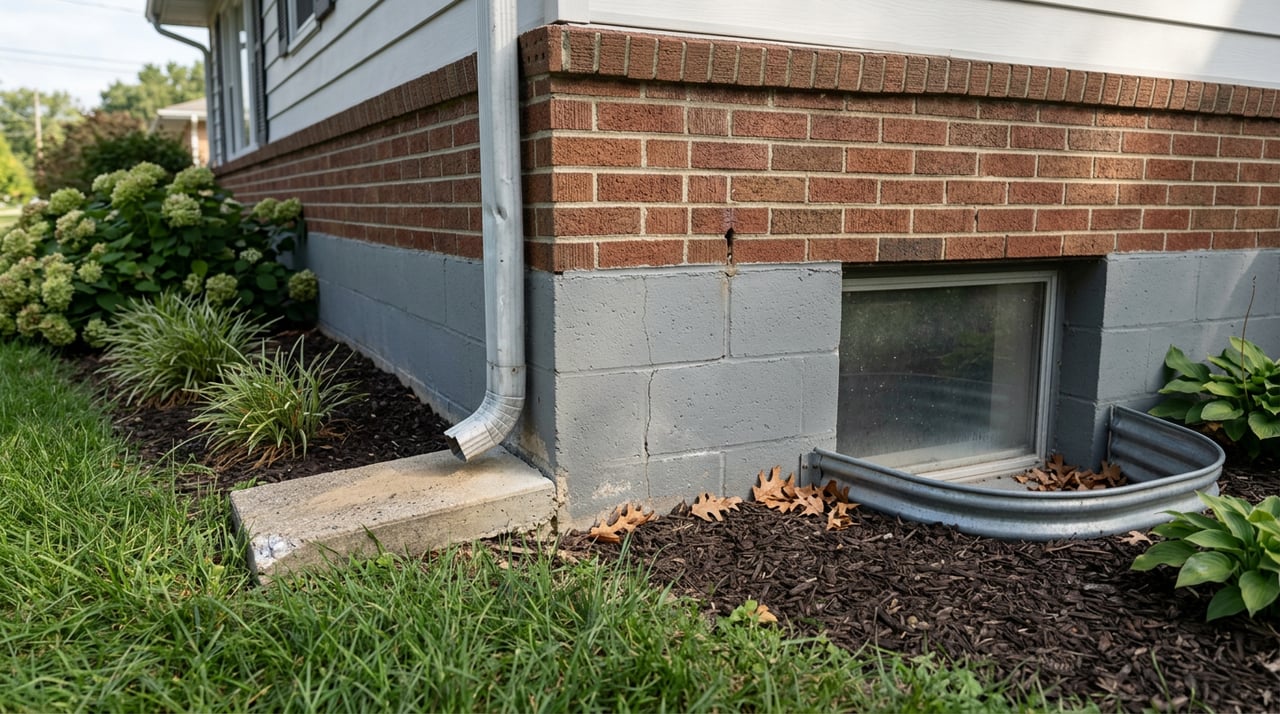
- Foundation cracks tied to shifting clay soil, common in Shawnee County. Clay swells wet and shrinks dry, and a hot Kansas August followed by a wet spring is enough to move a footing a fraction of an inch.
- Aging roofs, especially on homes built before 2000, where hail history has often shortened the useful life of what looks like a middle-aged shingle from the street.
- Outdated electrical panels. Older Topeka homes may still use fuse boxes or aluminum branch wiring, both of which insurers increasingly flag before they will bind a policy.
- HVAC systems near end of life, since most systems last fifteen to twenty years and a lot of Topeka furnaces installed in the early 2000s are now on borrowed time.
- Sewer line blockages from tree roots, a frequent issue in older neighborhoods where mature silver maples and elms sit near cast-iron laterals.
Those five patterns come straight from what local inspectors report seeing in Topeka. In Topeka's mix of historic neighborhoods and newer subdivisions, inspection findings can vary widely, from old plumbing systems in Potwin to foundation settling in areas with clay-heavy soil.
Two of those items deserve their own paragraph, because they carry the biggest cost gap between "handle it later" and "renegotiate now."
Sewer laterals. A sewer scope is not part of a standard inspection. It is an add-on, and in older Topeka neighborhoods it is the single most valuable extra a buyer can order. A camera run costs a couple of hundred dollars. A dug-up lateral in a mature yard runs into five figures. If the seller's disclosure said "no known plumbing issues" and the camera finds root intrusion at ten feet, that is the sort of gap Kansas common law is talking about when it says the seller cannot knowingly hide a defect.
Foundation. Kansas insurers have gotten stricter about how they treat expansive-soil claims, and a home with visible stair-step cracking in the basement will sometimes require a structural engineer's letter before a lender or insurer moves forward. You could face a higher insurance premium if the property has a history of structural problems. You should always request a structural engineer's report before making a final decision.
Radon is not optional in Topeka
Radon is where Topeka's local geology stops being background context and starts affecting the offer.
Shawnee County sits in EPA Zone 1, the highest-risk tier. The state-level numbers are the ones to anchor on. Shawnee County has 515 reported tests, a 3.6 pCi/L county average, a 2.3 pCi/L median, 31.1% of reported tests at or above 4.0 pCi/L, and a 50.6 pCi/L high-end signal for 2020. The EPA action threshold is 4.0 pCi/L. Almost a third of tested Shawnee County homes are above it.
The KDHE estimates approximately 40% of Kansas homes exceed 4.0 pCi/L, and northeastern Kansas counties, including Shawnee, sit in the highest-risk band because of glacial geology.
For a buyer, three things follow from that:
- Order the radon test as part of the inspection. It runs a modest add-on fee and is the cheapest data point in the whole file.
- If the result comes back above 4.0 pCi/L, a mitigation system is a normal ask, not an aggressive one. The cost of including radon-resistant new construction during the build ($350–$700) is a fraction of post-construction mitigation ($800–$2,500).
- Use a certified installer. Kansas requires radon contractors to hold Kansas-approved certification for both radon measurement and mitigation, and Kansas accepts NRPP or NRSB national certification as meeting state requirements. You can verify a contractor through the Kansas Radon Program or the Kansas Department of Health and Environment.
Kansas does not have a radon-specific disclosure statute. It does have the broader material-defect obligation, which means a seller who has a prior high-radon test and does not mention it is inside the same disclosure risk we talked about earlier.
The ten-to-fifteen day window, used well
Topeka contracts typically give buyers 10 to 15 calendar days after the contract is signed, though it can vary depending on the agreement, and the countdown starts the day both parties have signed and continues through weekends and holidays unless otherwise stated. Two weeks feels like a lot until you try to book a general inspector, a sewer scope, and a radon test in July, when everyone in Topeka is under contract at once.
A workable sequence for an older Topeka home:
- Days 1 to 3. Book the general inspection, radon test, and sewer scope in the same call. Ask the general inspector whether the electrical panel deserves a specialty follow-up.
- Days 4 to 7. Inspection happens. Report arrives. Read it against the seller's disclosure line by line. Any mismatch is a conversation.
- Days 8 to 12. If findings warrant it, get one contractor bid on the biggest item so your inspection notice cites a real number rather than a guess. A $2,400 mitigation quote lands differently than "please mitigate radon."
- Days 13 to 15. Submit the inspection notice. Kansas gives buyers buyer protection to uncover potential issues before finalizing the purchase, negotiation power to request repairs or seller credits, and earnest money safety if you decide to cancel within the inspection period for valid reasons.
Budget-wise, most inspections in Topeka cost between $350 and $500, depending on the size and age of the home, with specialty inspections adding more. Radon, sewer scope, and a WDI (termite) letter are the three add-ons that pay for themselves most often in this market. In Kansas, radon testing and termite inspections are especially common, particularly in older homes or properties with basements.
Reading the report like an agent, not a first-time buyer
A first-time buyer sees a fifty-page report with red flags on every other page and panics. An experienced eye reads the same document and sorts it into three buckets:
- Safety and habitability. Panel issues, active leaks, gas concerns, structural movement, high radon. These are the items that belong in the negotiation.
- End-of-life systems. A twenty-year-old furnace is not defective. It is old. Kansas law recognizes this. A system or component near or at the end of its life cycle is not considered a material defect. Price it into your first-year budget, do not ask the seller to replace it.
- Cosmetic and maintenance. Caulk, paint, minor grading. Note it, do not negotiate it.
The disclosure question sits over the top of all three buckets. If a safety item shows up in the report and the seller checked "no known issues" on the KAR form, that is a different conversation than if they marked it "unknown." Sellers also get an option to mark a point as 'unknown' in disclosures. This gives you ample opportunity to be honest in your disclosures. Also, marking a certain disclosure clause as 'unknown' shifts the burden on a buyer to inspect that particular problem. "Unknown" is a legitimate answer in Kansas. "No" when the seller knew is where the problems start.
Short answers to the questions this raises
Do Topeka sellers have to fill out a disclosure form? Not by state statute, but almost every listed property comes with one because agents use the Kansas Association of Realtors form as a matter of practice. Refusing to provide one is unusual and worth asking about.
What if the seller lies on the disclosure and I find out after closing? Talk to a Kansas real estate attorney quickly. Remedies are not spelled out in a single statute, but common-law fraud, breach of contract, and the Kansas Consumer Protection Act have all been used by buyers in this situation.
Should sellers get a pre-listing inspection? Often yes, especially for pre-2000 Topeka homes. A pre-listing inspection allows sellers to identify issues early, make targeted repairs proactively, and reduce the likelihood of last-minute renegotiations that can delay closing or derail the sale. It also lets you answer the KAR form with real knowledge rather than educated guesses.
Is waiving the inspection ever a good idea in Topeka? Given clay soil, Zone 1 radon, and the age of much of the housing stock, waiving inspections in Topeka trades a modest fee for a large unknown. In a slower Topeka market, most buyers do not need to waive to win.
If you are under contract on a Topeka home, thinking about listing one, or trying to figure out which specialty inspections are worth ordering for the specific house you are looking at, that is the kind of conversation I have every week. Reach out through NE Kansas Homes to schedule a consultation, and we will walk through the report, the disclosure, and the negotiation together, at your pace.